
Professor Helen Ayles, Research Director, Zambart, Zambia
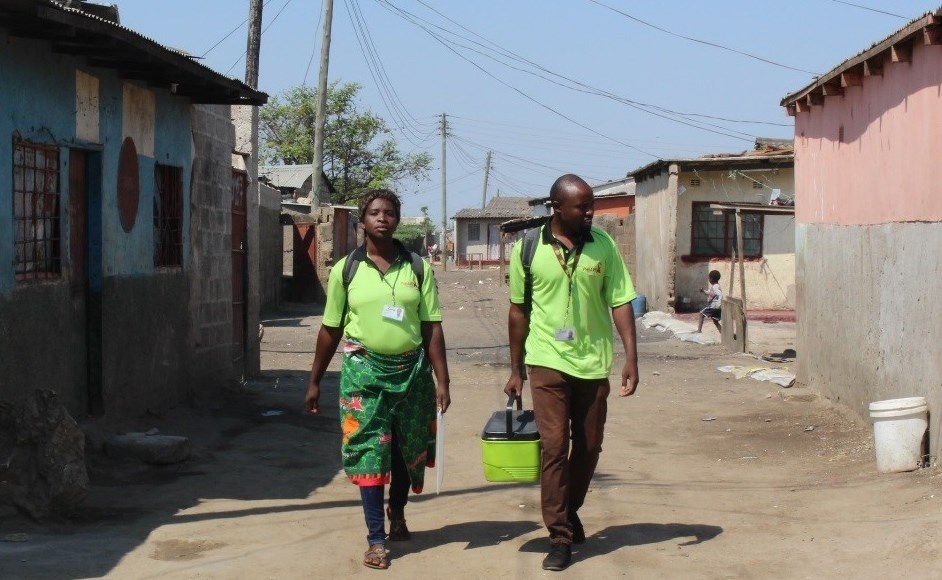
The recently completed HPTN 071 (PopART) study implemented a combination HIV prevention package, including universal HIV testing and treatment, to about 600,000 people in Zambia and South Africa over a period of four years [1]. Key to the success of the intervention was the successful linkage of people found to be living with HIV in the community to antiretroviral therapy (ART) provided at government health facilities. Much information about time to initiate ART comes from data collected at the health facility; it is therefore not representative of the situation where an individual, who may never have presented for HIV testing at a facility and may not have had any symptoms of HIV, finds out at home that they are HIV positive [2]. However, with the expansion of home- and community-based HIV testing services (HTS), increased attention has been paid to linkage from the community [3, 4, 5].
In PopART, the team started off with ambitious targets to link 80% of people living with HIV and not yet receiving ART to treatment within three months. However, as we started to implement the intervention during the first year of the study, we saw that the median time to starting ART was 10 months [6]. This prompted the team to embark on qualitative and quantitative research to understand the barriers to and facilitators of linkage to ART. From this work, we learned the following key lessons:
Delays in linkage are multifactorial, with barriers at individual, household, community and health facility levels. Government policies and concerns about the sustainability of ART programmes also contributed to delays in linkage [6]. In a case control study of individuals who did or did not link to care in a timely manner, we found that relationships with lay counsellors facilitated timely linkage, whereas perceptions about the busyness of the clinic and self-stigma or fears of stigma were barriers to timely linkage [7].
Timely linkage to ART is possible and must involve both community and health facility partnerships. Discussions between the research team, government partners and implementing agency partners identified various strategies to assist with linkage to care, which involved both community actors and systems, as well as the health facility systems. From the community side, the presence of community lay counsellors was identified as a key enabling factor. These counsellors increased their efforts to encourage their clients to link to the health facility, offering repeat follow-up visits, accompanying clients to the facilities and providing increased information about ART. The team skilled “specialist” lay counsellors, who had personal experience of living with HIV and taking ART, to help answer questions. At the health facilities, the provision of “reception desks” set up near to the gate of the facility assisted with patient navigation to reduce the stresses of joining the correct queue or accessing the correct clinic. Additional resources provided to clinics, including staff, buffer stock of ART and clerical and filing support, also assisted in reducing queues and alleviating community concerns about drug supplies. These measures allowed for a reduction in median time to linkage from 10 months to three months over the course of the study.
One size does not fit all. Some individuals link rapidly with no additional involvement needed, but others require more time and intervention. Overall, we found that different age groups and communities had varying times of linkage to care. As we expand differentiated models of HTS, we will need to be aware that the barriers will remain the same, but that the populations accessing testing may change. HIV self-testing (HIV-ST) is an exciting development to widen access to HTS; however, linkage to care is an ongoing concern. In a nested cluster-randomized trial, we offered HIV-ST to individuals in randomly selected zones of four PopART communities, including through secondary distribution from a partner [8]. Overall linkage to care was the same in the zones where HIV-ST was offered as in those with standard home-based HTS. However, linkage was found to be slower in those individuals who tested in the absence of the lay counsellors or who were never seen by the lay counsellors and received their HIV-ST through secondary distribution [9]. As HIV-ST expands, we need to identify how and where to most effectively provide linkage support to our clients, many of whom will test in private [10].
HIV testing without linkage to ART is pointless and, as we strive to reach the UNAIDS 95-95-95 targets, we will need to pay much more attention to community-based testing and the barriers and enablers of linkage to ART.
HPTN 071 is sponsored by the National Institute of Allergy and Infectious Diseases (NIAID) under Cooperative Agreements UM1-AI068619, UM1-AI068617, and UM1-AI068613, with funding from the U.S. President’s Emergency Plan for AIDS Relief (PEPFAR). Additional funding is provided by the International Initiative for Impact Evaluation (3ie) with support from the Bill & Melinda Gates Foundation, as well as by NIAID, the National Institute on Drug Abuse (NIDA) and the National Institute of Mental Health (NIMH), all part of NIH.
The content is the personal view of Professor Ayles and is solely the responsibility of the author and does not necessarily represent the official views of the NIAID, NIMH, NIDA, PEPFAR, 3ie, or the Bill & Melinda Gates Foundation.
References:
[1] Hayes R, Ayles H, Beyers N, Sabapathy K, Floyd S, Shanaube K, Bock P, Griffith S, Moore A, Watson-Jones D, Fraser C. HPTN 071 (PopART): rationale and design of a cluster-randomised trial of the population impact of an HIV combination prevention intervention including universal testing and treatment–a study protocol for a cluster randomised trial. Trials. 2014 Dec;15(1):57. Available from: https://www.ncbi.nlm.nih.gov/pmc/articles/PMC3929317/
[2] Govindasamy D, Meghij J, Negussi EK, Baggaley RC, Ford N, Kranzer K. Interventions to improve or facilitate linkage to or retention in pre‐ART (HIV) care and initiation of ART in low‐and middle‐income settings–a systematic review. Journal of the International AIDS Society. 2014 Jan;17(1):19032. Available from: https://www.ncbi.nlm.nih.gov/pubmed/25095831
[3] Sabapathy K, Hensen B, Varsaneux O, Floyd S, Fidler S, Hayes R. The cascade of care following community-based detection of HIV in sub-Saharan Africa–A systematic review with 90-90-90 targets in sight. PloS one. 2018 Jul 27;13(7):e0200737. Available from: https://www.ncbi.nlm.nih.gov/pubmed/30052637
[4] Ruzagira E, Baisley K, Kamali A, Biraro S, Grosskurth H, Working Group on Linkage to HIV Care, Wringe A, Celum C, Barnabas RV, van Rooyen H, Genberg BL. Linkage to HIV care after home‐based HIV counselling and testing in sub‐Saharan Africa: a systematic review. Tropical medicine & international health. 2017 Jul;22(7):807-21. Available from: https://www.ncbi.nlm.nih.gov/pubmed/28449385
[5] Govindasamy D, Kranzer K, van Schaik N, Noubary F, Wood R, Walensky RP, Freedberg KA, Bassett IV, Bekker LG. Linkage to HIV, TB and non-communicable disease care from a mobile testing unit in Cape Town, South Africa. PloS one. 2013 Nov 13;8(11):e80017.6. Available from: https://www.ncbi.nlm.nih.gov/pubmed/24236170
[6] Seeley J, Bond V, Yang B, Floyd S, MacLeod D, Viljoen L, Phiri M, Simuyaba M, Hoddinott G, Shanaube K, Bwalya C. Understanding the Time Needed to Link to Care and Start ART in Seven HPTN 071 (PopART) Study Communities in Zambia and South Africa. AIDS and behavior. 2018 Nov 10:1-8. Available from: https://www.ncbi.nlm.nih.gov/pubmed/30415432
[7] Sabapathy K, Mubekapi‐Musadaidzwa C, Mulubwa C, Schaap A, Hoddinott G, Stangl A, Floyd S, Ayles H, Fidler S, Hayes R, HPTN 071 (PopART) study team. Predictors of timely linkage‐to‐ART within universal test and treat in the HPTN 071 (PopART) trial in Zambia and South Africa: findings from a nested case‐control study. Journal of the International AIDS Society. 2017 Dec;20(4):e25037. Available from: https://www.ncbi.nlm.nih.gov/pubmed/29251433
[8] Mulubwa C, Hensen B, Phiri MM, Shanaube K, Schaap AJ, Floyd S, Phiri CR, Bwalya C, Bond V, Simwinga M, Mwenge L. Community based distribution of oral HIV self-testing kits in Zambia: a cluster-randomised trial nested in four HPTN 071 (PopART) intervention communities. The Lancet HIV. 2019 Feb 1;6(2):e81-92. Available from: https://www.ncbi.nlm.nih.gov/pubmed/30584047
[9] Floyd, S, Shanaube, K, Schaap, A, Phiri, M, Hensen, B, Mulubwa, C, Bond, V, Chiti, B, Simwinga, M, Hayes, R, Fidler, S, Mwinga, A, Ayles, H. Linkage to HIV care following HIV Self-testing: A cluster randomized trial of community-based distribution of oral HIV self-test kits nested in four HPTN 071 Communities in Zambia, in 22nd International AIDS Conference. 2018, IAS: Amsterdam, The Netherlands. Available from: http://programme.aids2018.org/Abstract/Abstract/7432
[10] d’Elbée M, Indravudh PP, Mwenge L, Kumwenda MM, Simwinga M, Choko AT, Hensen B, Neuman M, Ong JJ, Sibanda EL, Johnson CC. Preferences for linkage to HIV care services following a reactive self-test: discrete choice experiments in Malawi and Zambia. Aids. 2018 Sep 10;32(14):2043-9. Available from: https://www.ncbi.nlm.nih.gov/pubmed/29894386